
Name
Arthur C. Clarke
Known For
Writing
Birthday
1917-12-16
Deathday
2008-03-19 (91 years old)
Place of Birth
Minehead, Somerset, England, UK
Biography
Sir Arthur Charles Clarke CBE FRAS (16 December 1917 – 19 March 2008) was an English science-fiction writer, science writer, futurist, inventor, undersea explorer, and television series host.
He co-wrote the screenplay for the 1968 film 2001: A Space Odyssey, one of the most influential films of all time. Clarke was a science fiction writer, an avid populariser of space travel, and a futurist of a distinguished ability. He wrote many books and many essays for popular magazines. In 1961, he received the Kalinga Prize, a UNESCO award for popularising science. Clarke's science and science-fiction writings earned him the moniker "Prophet of the Space Age". His science-fiction writings in particular earned him a number of Hugo and Nebula awards, which along with a large readership, made him one of the towering figures of the genre. For many years Clarke, Robert Heinlein, and Isaac Asimov were known as the "Big Three" of science fiction.
Clarke was a lifelong proponent of space travel. In 1934, while still a teenager, he joined the British Interplanetary Society. In 1945, he proposed a satellite communication system using geostationary orbits. He was the chairman of the British Interplanetary Society from 1946–1947 and again in 1951–1953.
Clarke emigrated to Ceylon (now Sri Lanka) in 1956, to pursue his interest in scuba diving. That year, he discovered the underwater ruins of the ancient Koneswaram Temple in Trincomalee. Clarke augmented his popularity in the 1980s, as the host of television shows such as Arthur C. Clarke's Mysterious World. He lived in Sri Lanka until his death.
Clarke was appointed Commander of the Order of the British Empire (CBE) in 1989 "for services to British cultural interests in Sri Lanka". He was knighted in 1998 and was awarded Sri Lanka's highest civil honour, Sri Lankabhimanya, in 2005.
Known For
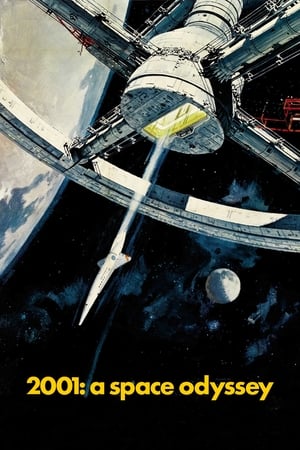
8.043
Humanity finds a mysterious object buried beneath the lunar surface and sets off to find i...
7.302
American filmmaker Stanley Kubrick (1928–1999), one of the greatest in history, but also...
6.6
The making of Stanley Kubrick's classic space epic, presented by James Cameron, including ...
6.8
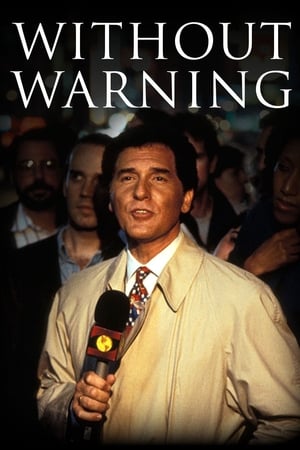
A television program is interupted by a news network announcing that three meteors have hi...
6.1
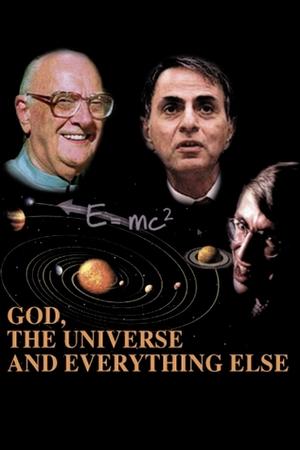
In a studio setting, Stephen Hawking, Arthur C. Clarke and Carl Sagan (who joins them via ...
6.5
A short documentary about the making of Stanley Kubrick's 2001: A Space Odyssey and its im...
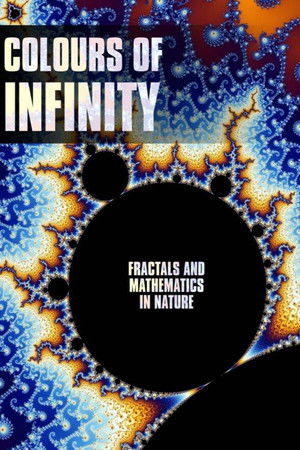
6.5
Explores the revolutionary world of Fractal Geometry - its far-reaching and often unexpect...
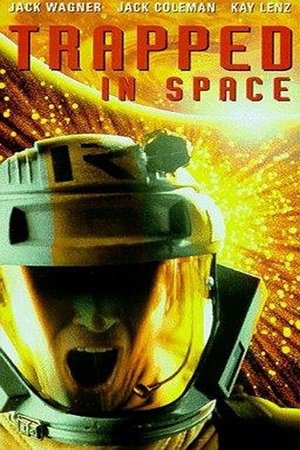
4.7
After an accident during a routine trip to Venus, a spaceship has only enough oxygen left ...
- 1988 God, the Universe and Everything Else as Self
- 1994 Without Warning as Self
- 1995 Fractals: The Colors of Infinity as Self
- 2001 2001: The Making of a Myth as Self
- 2007 2001: A Space Odyssey – What Is Out There? as Self (archive footage)
- 2017 I Saw the Future as Self (archive footage)
- 2018 9/11 Alchemy: Facing Reality as Himself
- 2003 To Mars by A-Bomb: The Secret History of Project Orion as Self
- 1984 2010 as Man on Park Bench (uncredited)
- 2015 Sky Line as Self (archive footage)
- 2007 Vision of a Future Passed: The Prophecy of 2001 as Self
- 2001 2001 and Beyond as Self
- 1966 2001: A Space Odyssey - A Look Behind the Future as Self
- 1984 2010 : The Odyssey Continues as Himself
- 1997 Arthur C. Clarke: The Man Who Saw the Future
- 2025 Starman
- 1980 Baddegama as Leonard Sidney Woolf
- 2020 Kubrick by Kubrick as Self (archive footage)
- 1994 Arthur C. Clarke's Mysterious Universe ( 26 episodes ) as Host
- 1985 Arthur C. Clarke's World of Strange Powers ( 13 episodes ) as Host
- 1982 Wogan ( 1 episode ) as Self
- 1980 Arthur C. Clarke's Mysterious World ( 13 episodes ) as Self
- 1964 Horizon ( 1 episode )
- 2022 Rendezvous with the Future ( 3 episodes ) as Self (archive footage)
- 1968 The Dick Cavett Show ( 1 episode ) as Self - Guest
- 2014 The Real History of Science Fiction ( 2 episodes ) as Self (archive footage)
- 1985 Television ( 2 episodes )
